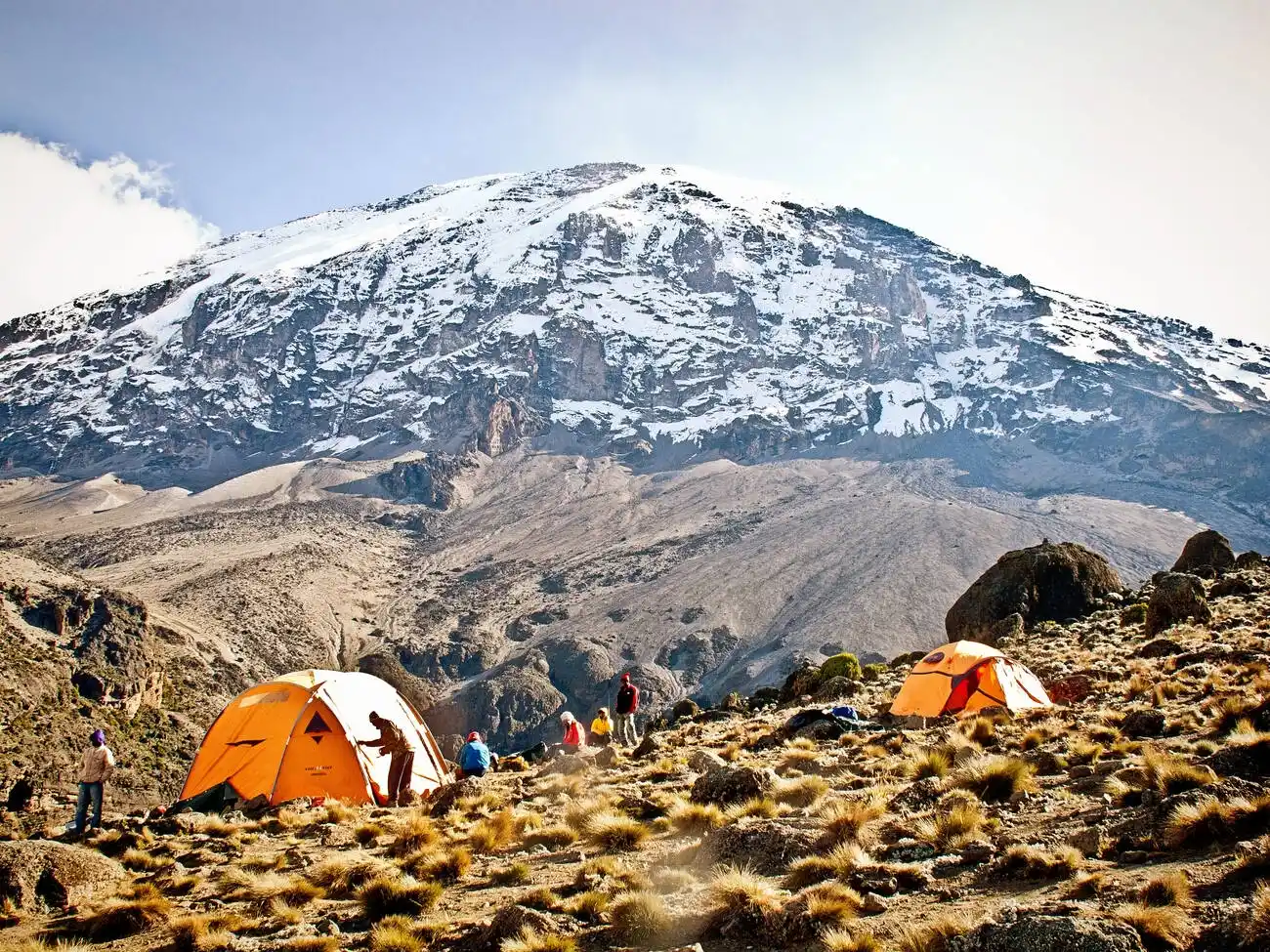
Short answer: Both trips climb the same Machame Route, about 62 km from Machame Gate to Uhuru Peak. There is only one real difference: the 7-day trip sleeps a night at Karanga Camp, and the 6-day trip walks that stretch in one long day. That extra night is the best thing most first-time climbers can buy for their summit chances. New to altitude? Choose 7 days. Already acclimatised, very fit and short on time? 6 days is a fair choice.
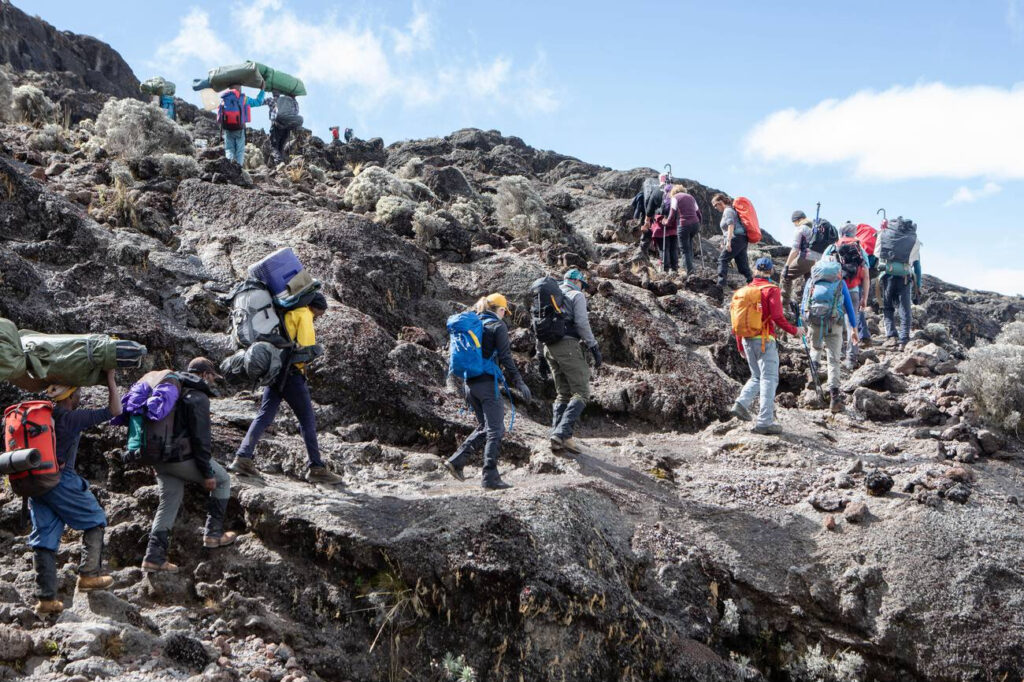
What is exactly the same on both trips?
- The route. Machame Gate, rainforest, Shira Plateau, Lava Tower, Barranco, the Barranco Wall, Barafu Camp, the summit, then down via Mweka Gate.
- The distance. Roughly 62 km, with camping in mountain tents and our crew carrying, setting up and cooking.
- The clever bit. Both versions walk up to Lava Tower at 4,630 m, then sleep lower at Barranco. Climb high, sleep low. It helps your body adjust.
So what does the Karanga night change?
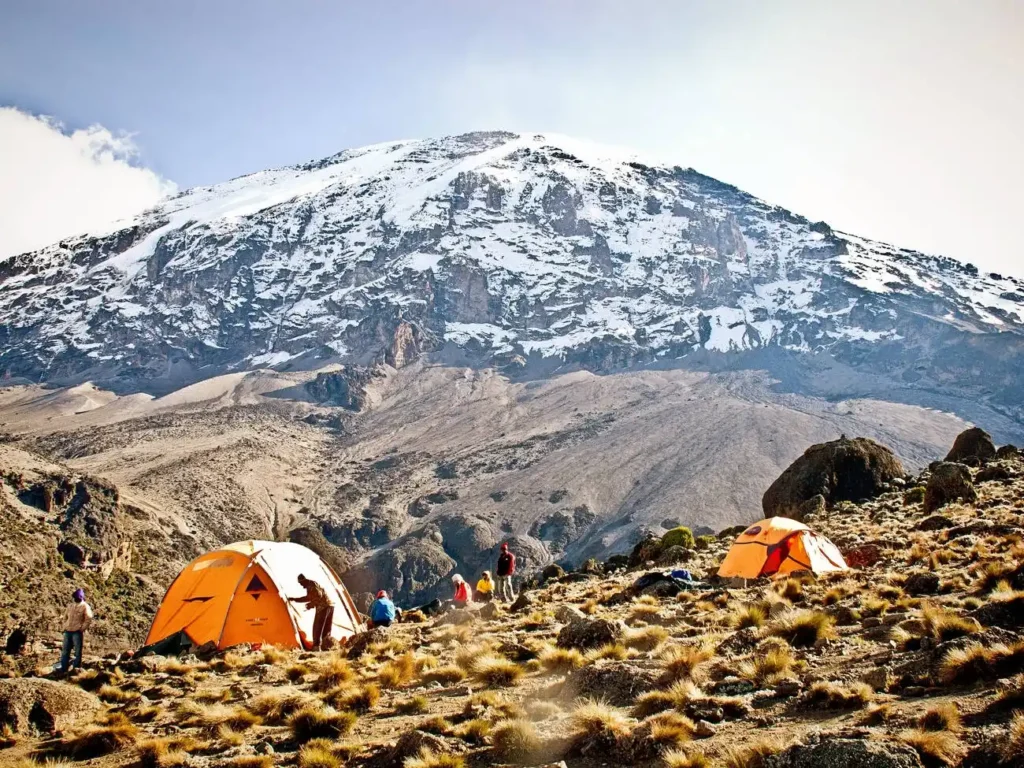
On the 7-day Machame, you stop at Karanga Camp (about 4,035 m) between Barranco and Barafu. It is a short walking day, an afternoon of rest, a full night of sleep, and one more day for your body to get used to the altitude before summit night.
On the 6-day Machame, you walk Barranco to Barafu in a single push. It is the hardest day of the trip before summit night itself, and you reach Barafu already tired, with only a few hours to rest before the midnight start.

| Machame 6 days | Machame 7 days | |
|---|---|---|
| Hardest day | Barranco to Barafu in one push, then summit night | Summit night itself |
| Rest before the summit push | A few hours at Barafu | A full night at Karanga, then a short day to Barafu |
| Best for | Pre-acclimatised or very fit trekkers, short on time | First-timers and anyone who can spare the day |
Will the extra day really improve my chances?
Honestly? There are no official published success rates for Machame, and the percentages you see online are operator estimates that disagree with each other. What nobody disputes is the direction: more days at altitude means better acclimatisation, and better acclimatisation means a better chance, and a more enjoyable climb. Nobody honest can guarantee you a summit. We will not try.
Why does one more day cost more?
Park fees are charged per day, for you and for your crew. A seventh day adds a day of fees, a day of crew wages, and a day of food. That is the whole difference. You are not paying for a different mountain, just one more day on it. We break the full cost down in what a Kilimanjaro climb actually costs.
Our honest advice: if you are undecided, take the 7 days. In years of watching climbers on this route, the people who regret the extra day are rare. The people who wish they had taken it are not.
Still torn? Tell us your dates and experience and we will recommend one, including telling you if 6 days is genuinely fine for you.